

Application principle of rock direct shear apparatus
Release Date:
2020-12-30
The direct shear apparatus is a widely used experimental instrument for determining the shear strength of rocks and soils. This paper introduces the research status of the direct shear apparatus from two aspects: the layout of the direct shear apparatus and the development of large-scale direct shear apparatus.
Rock Direct Shear Tester is a widely used experimental instrument for determining the shear strength of rock and soil. The research status of the rock direct shear tester is introduced from two aspects: the layout of the rock direct shear tester and the development of large-scale rock direct shear testers. On this basis, the layout, composition, and operating mechanism of the newly developed large-scale rock direct shear tester for both field and indoor use are introduced. And its characteristics are analyzed in detail. Compared with traditional rock direct shear testers, this large-scale rock direct shear tester has greater advantages and is more accurate. It has a wide range of applications, high testing accuracy, and can be used for both field and indoor experiments.
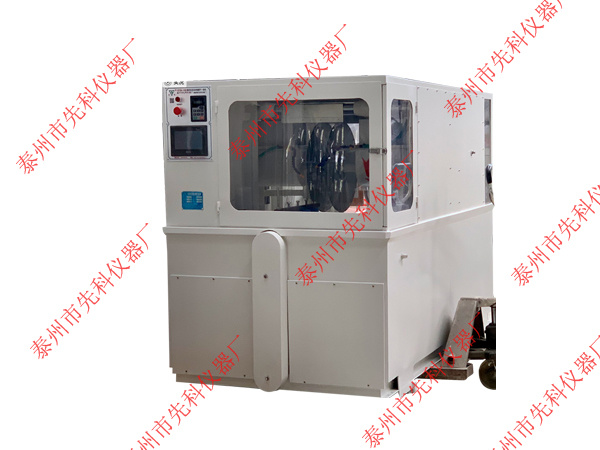
Instability in geotechnical engineering is mainly caused by shear damage. Accurately determining the shear strength parameters of geotechnics with a rock direct shear tester is of great significance for geotechnical engineering construction. The instability and destructive nature of geotechnical engineering are accompanied by the development of shear displacement. Therefore, methods of geotechnical testing using shear force have always received attention. At the same time, direct shear experiments are favored due to their simple operation, wide applicability, and other advantages. It refers to loose sediments accumulated at the foot of mountain slopes or on steep slopes, where collapsed rock masses are transferred under the action of gravity. The proposed Yiba Expressway route is planned to pass through many large rock piles, where geological conditions are complex and the density of rock piles varies greatly. The strength and stability of rock piles with different densities vary significantly, which is extremely unfavorable for engineering construction. Therefore, large-scale direct shear strength tests have been conducted on rock piles with the same water content but different densities. The results show that the water content and density of the rock piles are very uneven. The increase in shear displacement does not show obvious peaks, exhibiting clear strain-hardening characteristics; Direct shear strength indicators of rock piles c and φ plus their dry density, usually with higher density at the same water content, their shear strength is higher; When the dry density of the original gradation is different, as the density of the rockfill increases, its shear strength's sensitivity to density significantly decreases.
As the selection of soil and rock mixtures for roads, embankments, foundations, and other projects becomes increasingly widespread, quickly and accurately determining their shear strength targets becomes increasingly important. Large-scale indoor direct shear experiments are simple to operate and can quickly determine the mixture. Characteristics of material strength targets are widely used in engineering. However, there are many questions regarding the layout and function of large direct shear devices themselves, leading to certain errors in direct shear experiments and results concerning the operating conditions of the experimental principle and the actual strength of the mixture. This paper improves the indoor large-scale direct shear experiment and develops a new type of soil-rock mixture indoor large-scale direct shear experimental system, overcoming the main questions of traditional rock direct shear testers, making the experimental results more accurate and precise. reliable, and the experimental analysis is more complete.
Previous Page
Related News

Service Hotline
Email:jyxkyq@163.com
Address: Sanlin Industrial Park, Liangxu, Jiangyan District, Taizhou City, Jiangsu Province
Copyright © 2025 Taizhou Xianke Instrument Factory