

What are the structural compositions of a jaw crusher?
Release Date:
2022-08-01
Jaw crushers are typical traditional crushing equipment. In actual production and application, the structure of jaw crushers is very simple, mainly composed of a frame, a transmission mechanism, a working mechanism, a tensioning device, an adjusting device, a device, and a lubrication system.
The jaw crusher is typical of traditional crushing equipment. In actual production and application, the structure of the jaw crusher is very simple, mainly composed of a frame, a transmission mechanism, a working mechanism, a tensioning device, an adjusting device, a safety device, and a lubrication system. Today we are going to share content related to the frame, working mechanism, transmission parts, and lubrication device!
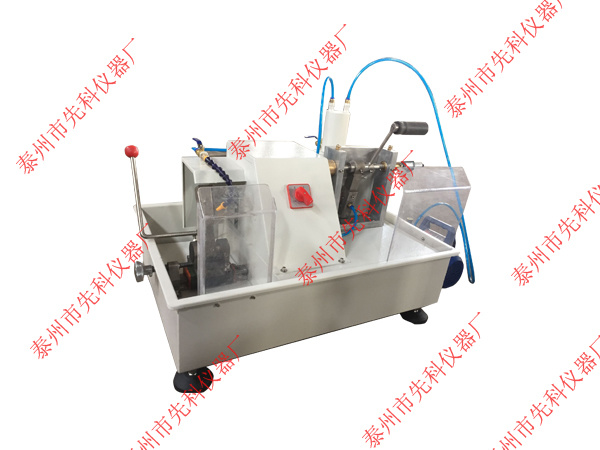
One: Frame
The frame is a four-walled rigid frame open at the top and bottom, which can be used to support the eccentric shaft and bear the reaction force from the crushed material, with moderate strength and rigidity. Generally, it is integrally cast with cast steel; for small machines, good cast iron can replace cast steel. The frame of large machines needs to be cast in sections and then securely connected with bolts to form a whole, and the casting process is quite complex. The frame of a self-made small Wuyue-style crusher can also be welded from thick steel plates, but the rigidity is relatively poor.
Two: Working Mechanism
The working mechanism of the jaw crusher is a combination of a fixed jaw and a movable jaw, both supporting tooth plates made of manganese steel. The tooth plates are fixed to the jaw plate with bolts and wedge irons. To improve the crushing effect, the jaw directly participates in crushing, and the inner plate surface has longitudinal waves, with convex and concave parts opposite to each other. The wear of different parts of the crusher liner is very uneven. Especially, the lower part near the discharge opening is more severely worn. Therefore, the inner wall is generally manufactured symmetrically top and bottom, and after the lower part is worn, it can be inverted to extend its lifespan.
Three: Transmission Parts
The eccentric shaft is the main shaft of the crusher, with a large bending torque, and is made of high-carbon steel. The eccentric part needs to be machined, heat-treated, fitted with bearing bushes, and babbitt metal poured in. One end of the eccentric shaft is equipped with a flywheel, and the other end is equipped with a pulley.
Four: Lubrication Device
Eccentric shaft bearings generally use centralized circulating lubrication. The central shaft and toggle plate support surfaces generally use grease supplied via a manual grease gun. The small swing angle of the toggle plate makes lubrication difficult between the central shaft and the bearings; therefore, several axial oil grooves are often opened at the bottom of the bearings, with a ring opened in the middle connected to an oil tank, and then dry butter (grease) is forcibly injected with an oil pump for lubrication.
When selecting, we usually need to comprehensively consider crushing process, equipment spatial layout, production capacity, equipment price, and operating costs.
Impact of Crushing Process on Jaw Crusher Selection
Due to the production characteristics of jaw crushers, the upstream process involves vehicle transportation, and the downstream process involves belt conveyor transportation. A vibrating feeder should be installed between the storage and the crusher to ensure a continuous and uniform supply to the jaw-type crusher. This requires special attention.
Impact of Layout Space on Jaw Crusher Selection
Jaw crushers are built according to the terrain, adopting a stepped layout, saving some space by "nailing mountains" (fitting into the landscape) in the warehouse. When arranging a single jaw crusher unit, the footprint has little impact on the production site; the main footprint is for the forklift loading and unloading platform.
Impact of Production Capacity on Jaw Crusher Selection
The specifications and models of the equipment are key factors affecting the production capacity of jaw crushers. Jaw crushers produced by different manufacturers depend on factors such as rotational speed, nip angle, eccentric throw of the main shaft, and feed opening size. These are critical in determining the equipment's processing capacity. Manufacturers have already set these at the factory. The equipment model name generally uses the size of the feed opening (length x width), where length refers to the length of the jaw plate (number of stationary jaws) and width refers to the distance between the jaw plates (number of dynamic jaws). At the same time, the size of the feed opening also determines the maximum material size that the crusher can process.
Impact of Equipment Price on Jaw Crusher Selection
While meeting production demands, the performance of jaw crusher equipment must be chosen to be as cost-effective as possible. Therefore, price is also one of the important factors when selecting equipment. If the price is too high, the vendor's service might be excellent, but it's also necessary to consider whether the vendor intends to gain high profits. If the price is too low, the vendor might be pushing inferior products.
Operating Costs
The main operating costs after a jaw-type crusher is put into operation include the consumption of easily worn materials and electricity consumption. Select a suitable enterprise through on-site inspection.
Related News

Service Hotline
Email:jyxkyq@163.com
Address: Sanlin Industrial Park, Liangxu, Jiangyan District, Taizhou City, Jiangsu Province
Copyright © 2025 Taizhou Xianke Instrument Factory